

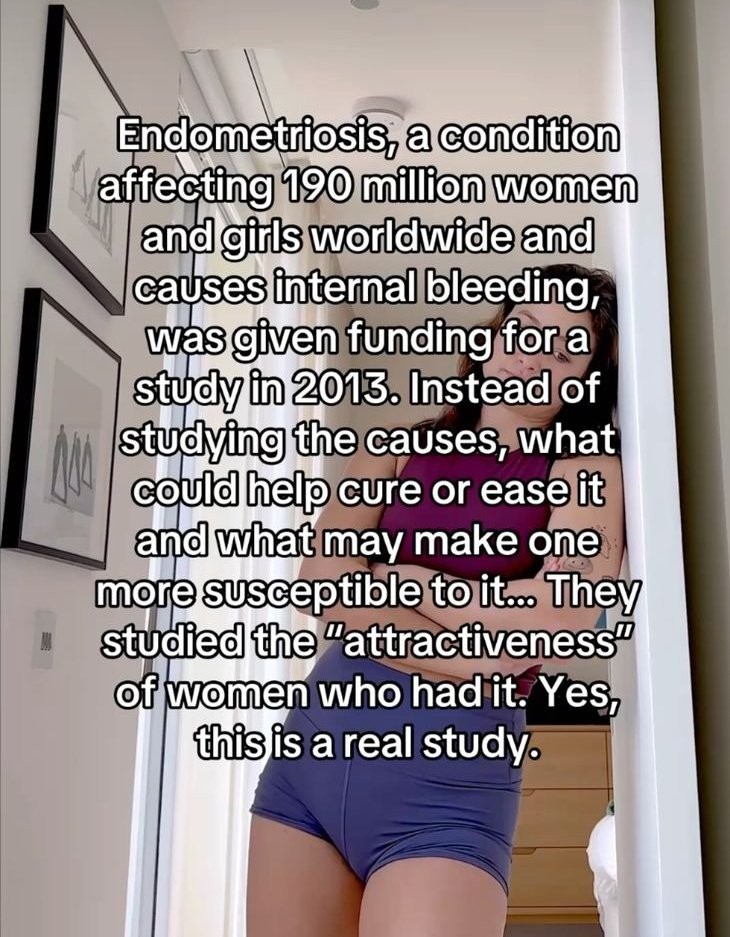
The study later got retracted due to backlash but the fact that it happened at all if fucking baffling.
Don’t forget this study that instead of studying the causes or cures for endo studied the mental effects of the men in a relationship with someone who has endo.
Fair points, though I will say chronic illness is usually classified by being resistant to treatment. Cancer (generally) isn’t chronic because either it kills you or you kill it. HIV is chronic because you cannot get rid of it (except for a handful of cases which underwent a risky bone marrow transplant but that’s ‘cheating’ – it’s like ‘treating’ chronic knee inflammation with an amputation).
One of the studies with chronic illness in the title I now read the abstract from mentioned Alzheimer and Parkinson so I doubt they referred to curable diseases currently.
Also, I wouldn’t be so quick to judge research as ableist if the results are ableist. Provided the studies are neutral, wouldn’t it generally be beneficial to know how much people suffering from certain illnesses are affected by ableism? (Also the study found people suffering from endometriosis were more attractive, which could at worst be mysoginist instead of ableist I believe).
As to your last point, I agree - to limited extent. My main gripe is: Who gets to determine what research is wasteful? Should someone studying a super niche math topic with no real world use case (like ultrafinitism) not get funding? And how do you determine whether something is worth exploring (or not) if you don’t yet know the results? Hell, even showing there is no correlation between two things can be useful data because it allows researchers to rule stuff out.